Replacing Your Roof? It's the Perfect Time to Rethink Your Siding Too
One mobilization, one permit cycle, one clean result — the case for tackling the whole exterior at once
QUICK ANSWER
In most cases, yes — if your siding is more than 15–20 years old or showing wear, replacing it during a roof project is the smarter, cheaper play. The crew is already mobilized, the wall-to-roof flashing gets rebuilt as one integrated system, and you only live through the disruption and permitting once.
Homeowners near Cleveland can compare options with a local specialist for siding installation North Olmsted OH before scheduling the roof.
Why does replacing both at once make sense?
A roof replacement is the largest exterior project most homeowners ever take on, and it tends to expose everything else. Once a bright new roof sits above faded, chalky siding, the contrast reads less like an upgrade and more like an unfinished job. There's a practical reason the most efficient renovations treat the roof and walls as a single envelope rather than two separate errands.
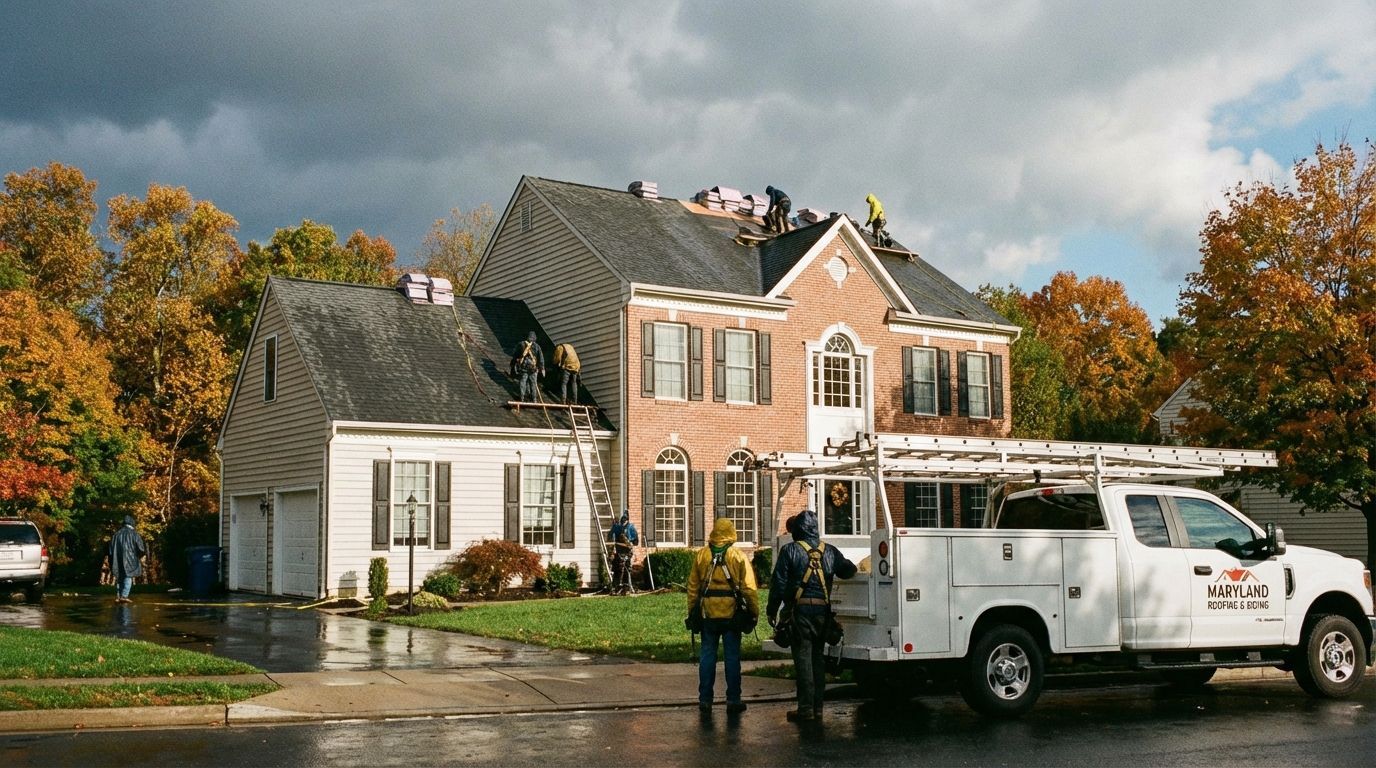
When the roofing crew is already on site, the expensive parts of any project — mobilization, staging, dumpsters, permits, and setup — are already paid for. Adding siding to that same window means you absorb those fixed costs once instead of twice, and you go through the noise, the driveway full of equipment, and the yard protection a single time.
At the wall-to-roof intersection, step flashing tucks behind the bottom courses of siding; the roof's drip edge and the wall's continuous housewrap lap together so water sheds instead of pooling. Sequencing both jobs together lets this detail be built as one system rather than patched around.
What is the flashing overlap most people miss?
The wall-to-roof intersection is the single spot where roofing and siding physically overlap. Step flashing tucks behind the bottom courses of siding, and the roof's drip edge, kick-out flashing, and the wall's water-resistive barrier all have to lap together in the correct order for water to shed instead of pool.
When siding is replaced at the same time as the roof replacement, those layers get rebuilt as one detail. When the jobs happen years apart, a crew usually has to cut, lift, or patch around whatever is already there — which is exactly where slow, hidden leaks tend to start. Getting both trades to detail the same intersection at the same time removes the most common failure point on the entire exterior.
Does doing both at once actually save money?
It rarely makes the combined project cheap, but it almost always makes it cheaper than doing the two separately. You're consolidating the parts of the bill that have nothing to do with materials.
Where the savings come from when you combine roof + siding:
- Mobilization & setup — paid twice separately; paid once combined
- Permit cycles — two applications separately; often one combined
- Dumpster & disposal — two hauls separately; shared combined
- Flashing integration — patched around separately; built as one system combined
- Household disruption — two events separately; one event combined
The disruption line matters more than homeowners expect. Combining the work means one stretch of blocked driveway, one round of landscaping protection, and one recovery — not two seasons of your home being a job site.
Why is re-siding the cheapest time to add insulation?
Stripping old siding exposes the bare wall — and that access never gets cheaper. According to the U.S. Department of Energy, the best moment to add a continuous layer of exterior insulation is when you're already planning to re-side, because the added material costs only incrementally more once the walls are open. Wall studs alone can account for a large share of a home's heat loss, so wrapping them in continuous insulation behind new siding tightens the envelope and can trim heating and cooling bills for as long as you own the house.
Bundled with a roof replacement, that means one crew can leave you with a sealed roof, a properly flashed wall line, and a better-insulated envelope in a single trip — a genuine whole-house improvement rather than a cosmetic refresh.
How do I choose a siding material?
The right choice depends on your climate, budget, and how long you plan to stay. Vinyl remains the most cost-effective and low-maintenance option; fiber cement (such as James Hardie board) trades a higher price for exceptional durability and fire resistance; and insulated vinyl builds thermal performance directly into the cladding. And because you're likely settling the roof at the same time, it's worth weighing that material too — whether a long-lasting metal roof or a classic asphalt shingle roof — since it sets the tone for how the whole exterior ages.
A quick way to narrow it down: if longevity and curb appeal top your list and the budget allows, fiber cement is hard to beat. If you want the best return per dollar with minimal upkeep, quality insulated vinyl is the pragmatic pick. A reputable local installer should walk you through samples and warranties rather than pushing a single product — a good sign you're dealing with a contractor who intends to stand behind the work.
What are the signs your siding is due for replacement?
Roof age is a useful trigger, but the siding itself will tell you when it's ready. Watch for warping or buckling panels, chalky residue on your hand when you touch it, paint that won't hold, soft or rotting spots, rising energy bills, or visible gaps where panels have pulled away from the wall. Any of these alongside a roof that's near end-of-life is a strong case for handling both together.
Planning a roof project this year? Ask a local specialist to assess the whole exterior before the first shingle comes off — one visit, one plan, one clean result.
Related questions
Can siding be replaced without touching the roof? Yes — siding is its own trade and can be replaced on its own schedule. The efficiency argument is about timing, not necessity: if the roof isn't due, there's no reason to force the two together. But if both are near end-of-life, combining them is where the savings and the cleaner flashing detail come from.
Which should be done first, the roof or the siding? When both are part of one project, the roof and its flashing are typically set first so the siding can be lapped correctly over the wall's water-resistive barrier and tucked behind the step flashing. A single contractor coordinating both trades avoids the sequencing mistakes that cause leaks.
How long does a combined roof and siding project take? It varies with home size and materials, but combining the work usually adds only a few days to the roof timeline rather than doubling it, because setup and teardown happen once. Your contractor can give a firm estimate after an on-site assessment.
Does new siding increase home value? Fresh siding consistently ranks among the higher-return exterior upgrades because it drives curb appeal and signals a well-maintained home to appraisers and buyers. Paired with a new roof, a home reads as "renovated" rather than merely "repaired."
Conclusion
- If your siding is aging or worn, replacing it during a roof project is usually the smarter, cheaper move.
- Setup, permits, and disposal get paid once — and you live through the disruption a single time.
- The wall-to-roof flashing is rebuilt as one integrated system, removing the exterior's most common leak point.
- Open walls are the cheapest moment to add continuous exterior insulation and tighten your home's envelope.
- Cleveland-area homeowners can start by comparing options for siding installation in North Olmsted, OH.