Snowbird Season in Boca Raton: Closing One Home and Opening Another
This is a subtitle for your new post
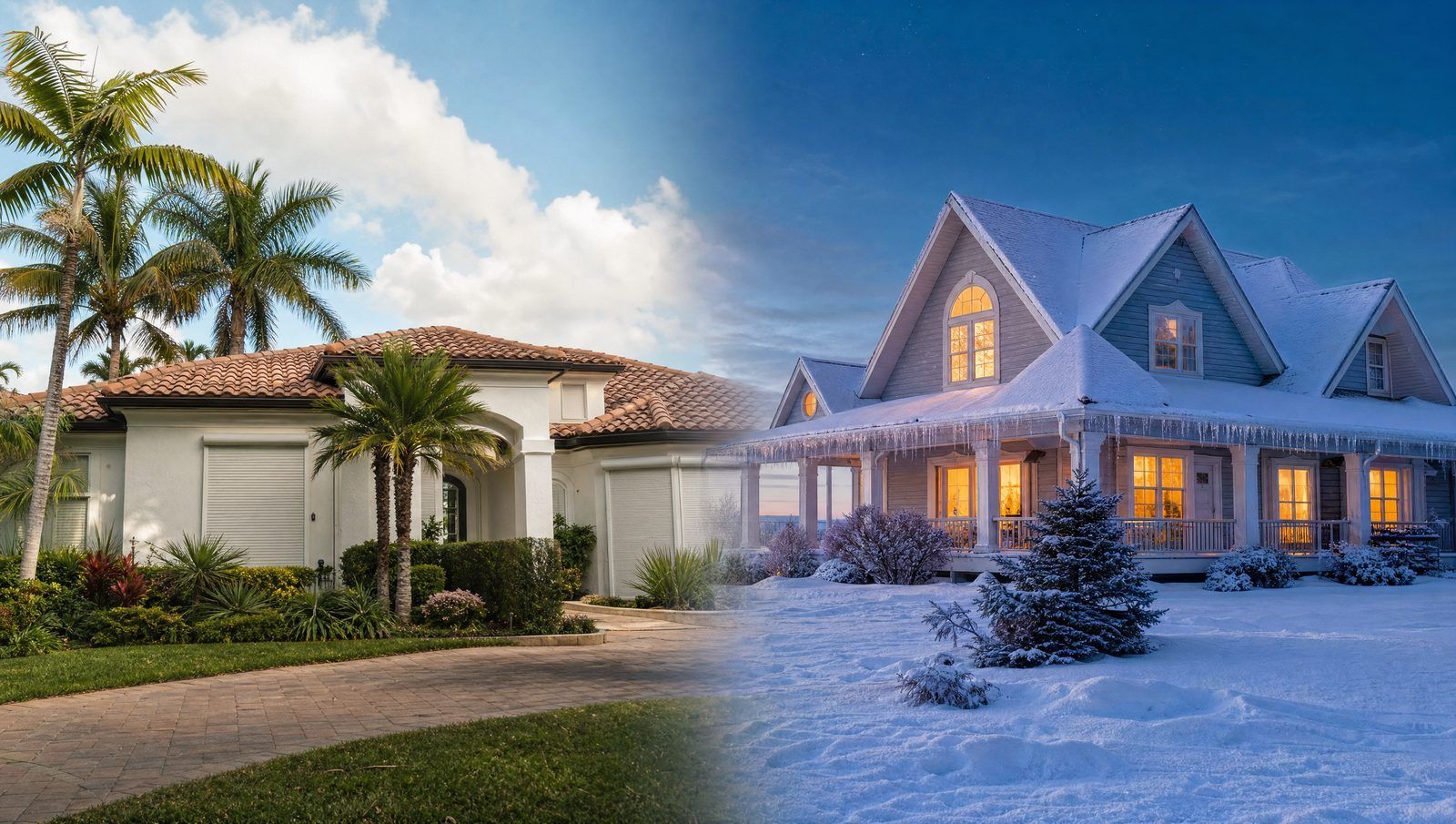
Every October, Boca Raton gets a little busier. The snowbirds are coming back. Condos that sat quiet all summer open up again, and a lot of the people turning their keys are managing two houses in two very different climates.
If that's you, the handoff between homes is where problems start. One house gets closed up and the other gets opened, and each one has its own weather to deal with. A little planning at both ends saves a lot of repair bills later, and it starts with what's over your head.
What a South Florida Summer Does to an Empty Home
A home that sits closed from May to October goes through the harshest stretch of the year with nobody watching it. That means daily afternoon storms, peak UV, humidity that hardly lets up, and at least one or two named storms passing close enough to matter.
On the roof, that shows up as lifted or cracked tiles, sealant that has dried out around vents and flashing, and gutters packed with debris from storms nobody cleaned up after. None of it is dramatic on its own. The trouble is that a small leak in an empty house can run for months before anyone notices the stain on the ceiling.
Inside, the damage usually comes from moisture. A house with the AC set too high, or switched off entirely, can grow mold on drywall, closets, and furniture in a matter of weeks. A roof leak on top of that speeds it all up.
Your Arrival Checklist for the Florida House
The first week back is the best time to catch whatever the summer left behind. Before you unpack, walk the property with fresh eyes:
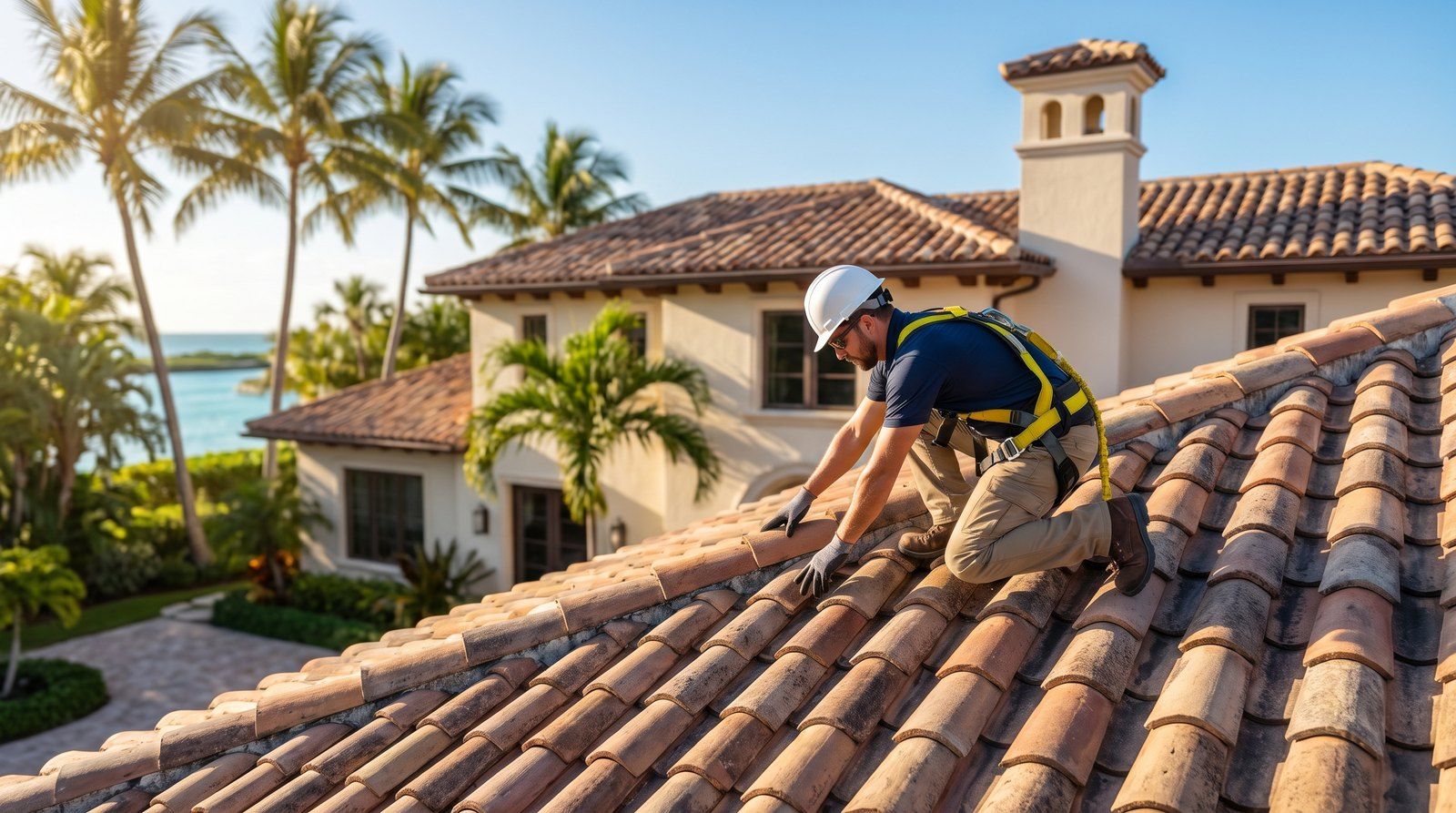
Look up first. From the yard, scan for displaced tiles, missing shingles, or debris sitting in valleys. Don't climb up yourself. If something looks off, have a roofer take a look.
Check the ceilings. Look for new stains, bubbling paint, or soft spots, especially near exterior walls and under bathrooms.
Open the attic hatch. Damp insulation, a musty smell, or daylight showing through the decking are all early warnings.
Run the AC and watch the drain line. A clogged condensate line that backs up is one of the most common "welcome home" surprises in South Florida.
The Home You Left Behind Needs the Same Attention
This is the part a lot of snowbirds forget. While you're enjoying 80 degrees here, the house up north is sitting through its hardest season with nobody there. Whatever you skipped before leaving, winter will find it.
For the many Canadians who winter in Boca, especially the ones coming down from the prairies, that means getting the mechanical systems checked before the drive south. In Grande Prairie, a mechanical contractor like Indoor Elements handles the furnace checks, frozen-pipe protection, and heating tune-ups that an empty house depends on through a -40 winter. A furnace that quits in January in an unoccupied home means burst pipes and water damage long before anyone knows about it.
The logic is the same one we apply to roofs down here. An unattended house has no early warning system, so the only real protection is making sure everything is sound before you leave.
Closing Up the Northern Home: What to Handle Before You Go
A short list covers most of the risk. Service the furnace and replace the filter. Set the thermostat to a safe minimum instead of turning the heat off. Shut off and drain any exterior water lines. Ask a neighbor or house-watch service to check in regularly, and think about a remote temperature sensor that texts you if the house gets too cold.
Take a look at that roof too. Snow load and ice dams are the northern version of our hurricane problem. Gutters clogged with fall leaves turn into ice dams that push meltwater under shingles, which is exactly the slow, hidden kind of leak that does the most damage in an empty house.
Two Homes, One Maintenance Mindset
The climates couldn't be more different, but the rule is the same at both ends. Houses rarely fail all at once. They fail in the months when nobody is around to catch the small problems.
Book the inspections before you leave and do a careful walk-through when you arrive. If you're settling back into Boca this season and something on the roof doesn't look right, have it checked early, before the first big winter front and before a small issue has months to grow.